
Winter Trout: 10 Tips to Stack the Odds in Your Favor When it Gets Cold
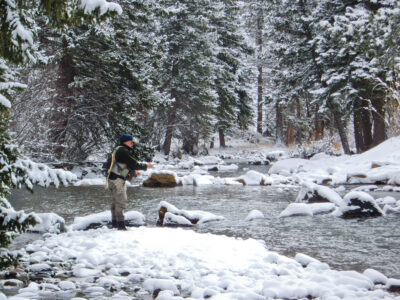 For many anglers, the onset of winter signals the end of the season. For others, it marks the beginning of something quieter and far more rewarding. Snow covered landscapes, lighter crowds, and technical fishing offer a rare opportunity to slow down, take it all in, and truly grow as an angler.
Winter trout fishing is never easy. Ice-cold water temperatures, sporadic hatches, low gin-clear flows, and lethargic trout all work against you. Success is earned one cast at a time. Yet those willing to embrace the challenge, winter delivers a level of satisfaction that the other seasons can’t match.
The good news is that winter fishing doesn’t have to be miserable—or unproductive—it’s really only as difficult as you make it! With modern day advancements in layering and technical outerwear, staying warm and comfortable is easier than ever. Getting outdoors is half the battle during the winter…catching a few fish is an added bonus.
If you can consistently fool trout during the coldest months, the remainder of the year becomes a litttle easier. Winter sharpens your skills, forces you to pay attention to detail, and teaches patience. Those lessons carry forward long after the snow melts.
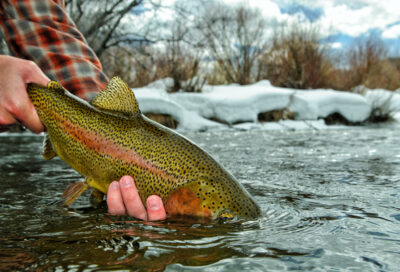 Here are ten proven tips to help stack the odds in your favor when targeting trout in winter:
1. Dress in layers. Staying warm and dry is critical—it allows you to stay focused and fish for longer periods of time.
2. Fish midday. There’s no need for an early start this time of year. The most productive window is typically between 10 a.m. and 3 p.m., when slight warming and midge activity often trigger feeding.
3. Target tailwaters. Deep bottom-release tailwaters offer the most consistent winter fishing, especially within the first few miles below a dam. If you encounter slush or anchor ice, move closer to the dam where the warmest water is found.
4. Winter Water. Focus on deeper pools, slow runs, and soft-water margins where trout can feed without expending excessive amounts of energy. Fast water is rarely productive in winter.
5. Simplify your fly selection. Midges dominate a trout’s diet from November through March. When in doubt, fish something small and dark—brown and black fly-patterns are reliable staples.
6. Less is more. The difference between success and frustration often comes down to size. A size 24 midge imitation typically outfishes a 22 when trout are pressured and selective.
7. Downsize your tippet. Light tippet is critical in clear, cold water. Use 6X, 6.5X, or even 7X when necessary, always fishing the heaviest tippet you can while still getting strikes. Nylon is preferred for dry flies.
8. Don’t go overboard with flashy attractors. In low, clear water, large or gaudy flies can act as a red flag and spook wary trout. Subtle attractors like a Rainbow Warrior, Flashback Mercury Black Beauty, red larva, and so on, often outperform oversized nymphs or brightly colored San Juan Worms.
9. Don’t rule out experimentation. When the bite shuts down, thinking outside the box—such as fishing a leech, cranefly larva, stonefly nymph, or a streamer—can sometimes turn the day around. Even so, smaller offerings generally produce more consistently during winter.
10. Embrace the experience. Winter fishing rewards patience, precision, and persistence. Treat every outing as an opportunity to refine your skills and deepen your understanding of trout. Most of all…have fun!
At the end of the day, knowledge leads to success. The more you understand the river, entomology, seasonal strategies, and trout behavior, the better angler you’ll become. Winter fishing may be unforgiving at times, but for anglers willing to put in the work, it offers solitude and some of the most rewarding fishing of the year.