
Drought Update
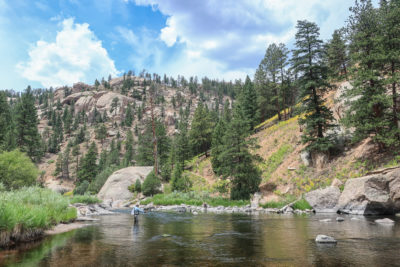
I was born in the Centennial State over six decades ago. Lean water years have been a recurring problem since my childhood, but nothing compares to what we are experiencing as of late.
As a young man, I clearly remember the dry years from 1975 through 1978. As I have aged, Colorado has experienced several low-water years, with the most notable occurring in 2002, 2012, 2018, and 2020. Many climate experts consider the drought of 2026 the worst on record because Colorado experienced the lowest recorded snowpack in history. Toss in the lack of rain, and things get really bad.
Denver Water opted to drain Antero Reservoir and move the water to Cheesman Reservoir to reduce evaporation. Currently, the outflow below Antero is a spooky 3 cfs. Spinney Reservoir is low too, sitting at about 50% capacity. The good news is that Eleven Mile Reservoir is at 102% capacity, while Cheesman is at 80%. Dillon Reservoir is also at 80% capacity.
Despite the drought, Denver Water still has to meet downstream demand, which is no easy task. Our rivers are water conduits, and the fishing is simply a byproduct of these waterways.
According to Natthan Elder, Raw Water Manager for Denver Water: “This may be counterintuitive, but I generally expect a good year for flows below Cheesman Reservoir. With the Stage 1 restrictions in Denver, demands are expected to be lower, and I expect flows to be lower and closer to the South Platte Protection Plan optimum range of 100 to 225 cfs through July. July could get a bit higher depending on the weather. Cheesman Reservoir won’t fill this year, and all releases will be from the bottom, so the water will be colder. However, it might be a few degrees warmer than usual because of the mild winter. Roberts Tunnel flow will be close to the same, again likely nothing really high this year.
Looking a bit longer term, next year we are forecasting a 40% chance of refilling Cheesman Reservoir. That could mean a few things depending on next year’s snowpack. With another poor snowpack, flows would be lower because of further restrictions. If we get a decent snowpack, flows may still be lower as we use other supplies and try to refill the reservoir.”
This is where we can all do our part. Please conserve as much water as you can. If we all try and conserve water it will make a huge difference.
“If you can, talk to clients about saving water and connect Front Rangers to their water source, making the connection that conservation in the city helps the South Platte have better fishing. In years like this, every bit counts,” Elder added.
As stewards of the environment, we must keep a close eye on river levels and water temperatures. If the outflows are below 100 cfs, it’s a good idea to explore other options. If the water exceeds 67 degrees, please quit fishing. It’s best to start early and finish early.
Here’s a look at some of the river outflows as of July 5, 2026. Use my stream report for updated conditions on many of these streams.
- South Platte River below Spinney Mountain Reservoir: 97 cfs
- South Platte River below Eleven Mile Reservoir: 92 cfs
- South Platte River below Cheesman Reservoir: 260 cfs
- South Platte River below Strontia Springs Reservoir: 143 cfs
- Williams Fork below Williams Fork Reservoir: 311 cfs
- Blue River below Dillon Reservoir: 53 cfs
- Fryingpan River below Ruedi Reservoir: 158 cfs
- Taylor River below Taylor Park Reservoir: 226 cfs
The state’s freestone rivers are running very low, so it’s better to fish a tailrace. I’m praying for rain, and hopefully we’ll see some monsoonal moisture soon. In the meantime, hit your favorite tailwater, keep an eye on water temperatures, and release our finned friends quickly to ensure they live another day.